Olive Garden Pasta Fagioli Slow Cooker Recipe with Ground Beef
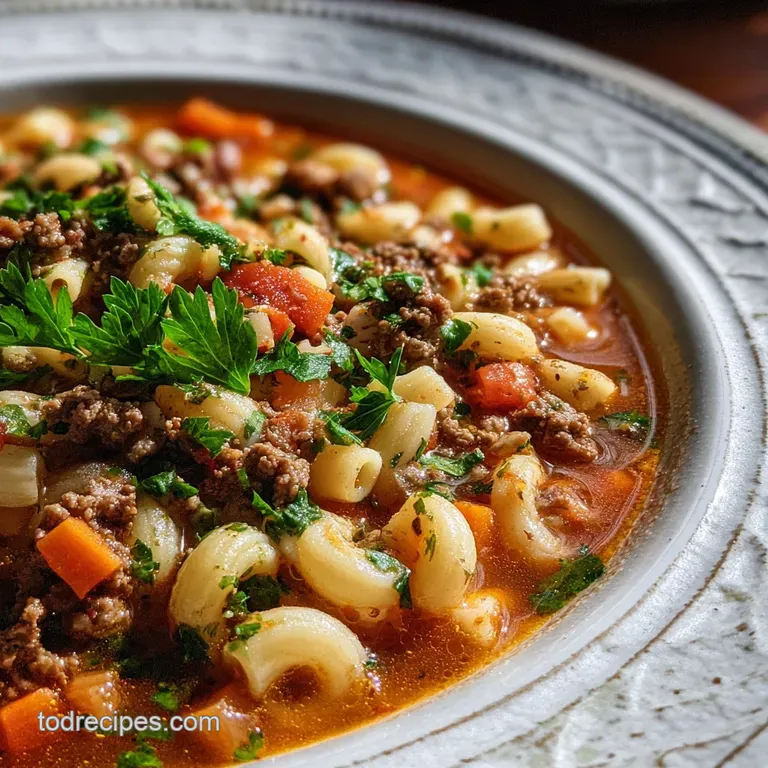
- The Olive Garden Pasta Fagioli Slow Cooker Recipe with Ground Beef
- The Physics of the Infusion
- Precision Cooking Specs for the Perfect Batch
- Deep Dive into the Pantry Essentials
- Ingredients & Substitutes
- Necessary Gear for a Stress Free Meal
- Step-by-Step Guide from Prep to Plate
- Navigating Common Mistakes and Slow Cooker Pitfalls
- Smart Adaptations for Every Dietary Need
- Debunking Kitchen Folklore
- Preservation Secrets for the Best Leftovers
- Serving Suggestions to Complete the Experience
- Critical in Sodium
- Recipe FAQs
- 📝 Recipe Card
The Olive Garden Pasta Fagioli Slow Cooker Recipe with Ground Beef
Imagine walking through your front door after a long, rainy Tuesday and being hit by the scent of toasted garlic, earthy oregano, and simmering beef. It's that heavy, savory aroma that promises the kind of warmth only a thick, bean studded soup can provide.
I remember the first time I tried to recreate this; I dumped everything in at once, pasta and all, and ended up with a slow cooker full of beige mush. This Olive Garden Pasta Fagioli slow cooker recipe with ground beef delivers ultimate comfort in a bowl, but only if you follow the rhythm of the ingredients.
We've all been there, standing in the kitchen craving that specific restaurant style depth without wanting to pay the restaurant price tag. This version isn't just a copycat it's actually better because you control the salt and the quality of the beef.
You’ll get that shatter of crisp celery against the velvety beans and the snap of perfectly timed ditalini. Trust me, once you nail the order of operations, you'll never look at a canned soup the same way again.
Right then, let's talk about why this specific method works so well. We aren't just boiling things in a pot; we’re using the low, consistent heat of the crockpot to break down the connective tissues in the beef and the starches in the beans.
It’s a slow motion flavor marriage that simply cannot be rushed on a over high heat stovetop without scorching the bottom.
The Physics of the Infusion
Osmotic Balance: By adding the beans mid way or using canned versions that are already hydrated, we prevent the broth from being sucked dry by the legumes. This ensures the liquid remains a soup rather than becoming a thick stew or a "pasta cake."
- Maillard Integration: Browning the 1 lb lean ground beef (90/10) before it hits the slow cooker creates complex melanoidins that a raw dump method lacks.
- Starch Gelatinization Control: Adding the 1.5 cups ditalini pasta only at the very end prevents the grains from over hydrating and losing their structural integrity.
- Acidic Brightening: The 24 oz marinara sauce and 28 oz diced tomatoes provide the necessary acidity to cut through the heavy fats of the beef.
- Collagen Breakdown: Even in lean beef, the 7 hours of low heat softens the protein fibers until they are tender enough to melt on the tongue.
| Thickness of Meat | Internal Temp | Rest Time | Visual Cue |
|---|---|---|---|
| Finely Crumbled (Pre sear) | 165°F (74°C) | 0 mins | No pink remains, edges are brown |
| Chunky Crumbled (Pre sear) | 165°F (74°C) | 2 mins | Steaming hot, fat has rendered out |
| Fully Simmered (In Soup) | N/A | 5 mins | Meat is tender and dark, soup is glossy |
The table above helps you gauge the beef prep before it even enters the crockpot. Since we’re using a slow cooker, the meat must be fully browned first to avoid a greasy, grey texture that often plagues "dump and go" recipes.
Precision Cooking Specs for the Perfect Batch
When you're aiming for that steakhouse quality soup at home, precision matters. We aren't just guessing here; we're looking for specific markers of doneness and flavor development.
You’ll want to keep an eye on the clock during the last 30 minutes, as that’s when the magic or the mush happens.
Chef's Tip: Freeze your parmesan rinds! Toss one into the slow cooker at the beginning of the 7 hours. It won't melt away, but it will release a deep, salty umami that mimics the complexity of a 12 hour simmered bone broth.
Another trick I've learned through trial and error is to bloom your spices. When you’re browning your 1 cup white onion and 3 cloves garlic, toss in the 2 tsp oregano and 2 tsp basil for the last 60 seconds.
The heat "awakens" the volatile oils in the dried herbs, making them far more potent than if they were just stirred into the cold liquid.
Finally, don’t skimp on the bean prep. Rinsing the 15 oz red kidney beans and 15 oz cannellini beans is non negotiable. The liquid in the can is full of excess salt and metallic tasting starches that will cloud your broth and make it taste "canned" rather than "handmade."
Deep Dive into the Pantry Essentials
Understanding your components is the secret to making a budget meal taste like a million bucks. We’re using a mix of pantry staples and fresh aromatics to build layers of flavor that feel sophisticated but cost very little per serving.
| Component | Science Role | Pro Secret |
|---|---|---|
| Low Sodium Beef Bro (48 oz) | The primary solvent for mineral extraction | Use a "Better Than Bouillon" base for a richer, more concentrated flavor profile |
| Ditalini Pasta (1.5 cups) | Provides the "bite" and absorbs finishing flavors | Cook it separately in salted water if you plan on freezing leftovers to avoid bloating |
| Red Pepper Flakes (0.5 tsp) | Acts as a flavor catalyst without adding heat | Toast them in the beef fat to distribute capsaicin evenly throughout the broth |
While the list above covers the heavy hitters, the smaller players like the 1 cup carrots and 1 cup celery provide the essential "mirepoix" base. These vegetables should be diced as uniformly as possible about the size of a bean so that every spoonful has a balanced ratio of protein, veg, and starch.
Ingredients & Substitutes
The following list uses the exact measurements needed for a standard 6 quart slow cooker. If you’re missing something, don’t panic; this soup is incredibly forgiving as long as you maintain the liquid to solid ratio.
- 1 lb lean ground beef (90/10): The protein foundation.
- Substitute: 1 lb Italian sausage. Why this? Adds a spicier, more traditional "Italian" flavor but increases fat content.
- 48 oz low sodium beef broth: The liquid base.
- Substitute: Chicken broth or vegetable stock. Why this? Changes the color slightly but works if you're out of beef stock.
- 24 oz marinara sauce: Provides body and sweetness.
- Substitute: Tomato sauce with a pinch of sugar. Why this? Mimics the cooked down sweetness of a pre made marinara.
- 1.5 cups ditalini pasta: The classic shape.
- Substitute: Small elbow macaroni. Why this? Similar size and cook time; stays on the spoon easily.
- 15 oz cannellini beans: Creamy white beans.
- Substitute: Great Northern beans. Why this? Almost identical texture and mild flavor profile.
I once tried making this with 80/20 beef because it was on sale, and honestly, don't even bother unless you want to spend twenty minutes skimming grease off the top of your soup. Stick to the 90/10 lean beef; it stays tender in the slow cooker without turning the broth into an oil slick.
Necessary Gear for a Stress Free Meal
You don't need a professional kitchen, but a few specific tools make this Olive Garden Pasta Fagioli slow cooker recipe with ground beef a lot easier to manage.
- 6 Quart Slow Cooker: This is the sweet spot for an 8 serving recipe. Anything smaller and you’ll be flirting with the "max fill" line, which can lead to uneven cooking.
- Heavy Bottomed Skillet: A cast iron or stainless steel pan is best for browning the beef. You want that hard sear, not a gentle steam.
- Fine Mesh Sieve: Essential for rinsing those beans thoroughly to remove the "tinny" flavor from the canning liquid.
- Sharp Chef's Knife: For the 1 cup carrots and 1 cup celery. Consistent cuts mean consistent bites.
step-by-step Guide from Prep to Plate
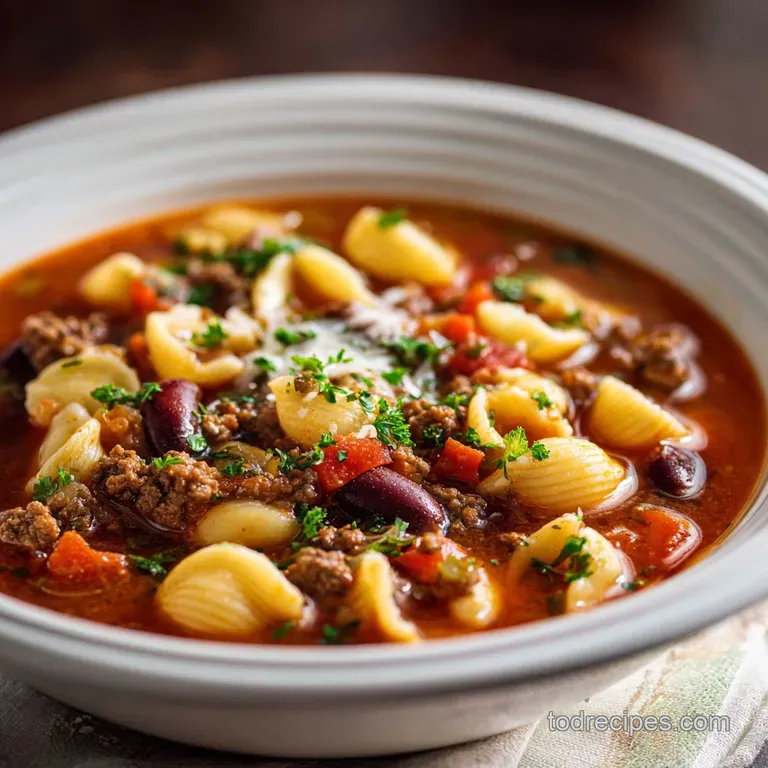
- Brown the beef. In your skillet, cook the 1 lb ground beef until no pink remains and edges are crisp. Drain the excess fat. Note: This prevents the soup from becoming oily.
- Sauté aromatics. Add the 1 cup white onion, 1 cup carrots, and 1 cup celery to the skillet for 5 minutes until onions are translucent and fragrant.
- Bloom the garlic. Stir in the 3 cloves minced garlic for 60 seconds until you smell a sharp, sweet aroma.
- Transfer to slow cooker. Place the beef and veg mixture into the crock. Add the 28 oz diced tomatoes (undrained) and 24 oz marinara sauce.
- Add the legumes. Stir in the 15 oz red kidney beans and 15 oz cannellini beans (both rinsed).
- Season the pot. Add the 2 tsp oregano, 2 tsp basil, 0.5 tsp red pepper flakes, 1 tsp salt, and 0.5 tsp black pepper.
- Submerge with broth. Pour in the 48 oz beef broth and stir well until ingredients are evenly distributed.
- Low and slow. Cover and cook on low for 7 hours.
- The pasta finish. Stir in the 1.5 cups ditalini pasta. Increase heat to high and cook for 20-30 minutes until pasta is tender but firm to the bite.
- Final rest. Turn off the heat and let the soup sit for 10 minutes. This allows the broth to thicken slightly before serving.
Navigating Common Mistakes and Slow Cooker Pitfalls
The biggest tragedy that can befall this soup is "The Great Pasta Swell." If you add the ditalini too early, they act like little sponges, soaking up every drop of that 48 oz beef broth and turning into a soggy mess.
Why Your Soup Is Too Thick
If you find your soup has turned into a casserole overnight, it’s because the pasta continued to absorb liquid even after the heat was off. This happens when the starches in the ditalini release into the broth.
| Problem | Root Cause | Solution |
|---|---|---|
| Mushy pasta | Added pasta at the start of the 7 hours | Only add pasta in the final 30 minutes of cooking |
| Bland broth | Forgot to sear the beef or bloom the spices | Stir in a teaspoon of beef base or a splash of balsamic vinegar |
| Too much oil | Used high fat beef without draining | Chill the soup and scrape the solidified fat off the top |
Another thing to watch for is the acidity. Sometimes, depending on the brand of 28 oz canned diced tomatoes you use, the soup can taste a bit sharp. A tiny pinch of sugar (just a teaspoon) can neutralize that bite without making the soup sweet.
Common Mistakes Checklist
- ✓ Sear the beef in a separate pan never put raw meat directly into the slow cooker for this recipe.
- ✓ Rinse your beans until the water runs clear to avoid a cloudy, metallic broth.
- ✓ Add the pasta only at the very end; if you're meal prepping, cook the pasta on the stove and add it to individual bowls.
- ✓ Don't skip the "rest" period after cooking it helps the flavors settle and the temperature become uniform.
- ✓ Use low sodium broth so you can control the final saltiness yourself at the end.
Smart Adaptations for Every Dietary Need
Scaling this recipe is fairly straightforward because it’s a liquid based dish. If you're cooking for a crowd or just a couple, keep these ratios in mind to ensure the flavor stays bold.
Scaling Down (Feeding 2-4) Use a smaller slow cooker (3 quart). Reduce the ingredients by exactly half, but keep the 7 hours cook time on low. Be careful with the salt; sometimes half recipes can taste saltier as they reduce, so season at the very end.
Scaling Up (Feeding 16) You’ll need two 6 quart slow cookers or one massive 10 quart model. For the spices, only go to 1.5x the original amount (3 tsp instead of 4) and taste before adding more.
Liquids like the broth can be reduced by 10% to prevent the pot from overflowing, as less evaporation occurs in a larger volume.
| Method | Time | Texture | Best For |
|---|---|---|---|
| Slow Cooker | 7 hours | Silky, deep, integrated | Hands off meal prep |
| Stovetop | 45 minutes | Bright, chunky, distinct | Last minute dinner |
| Instant Pot | 30 minutes | Very soft beans, intense | Maximum speed |
Debunking Kitchen Folklore
One myth I hear all the time is that you have to soak canned beans. You absolutely don't. They are already cooked in the can! Rinsing them is for flavor and sodium control, not for texture. Another one?
"Slow cooking evaporates the alcohol in wine." If you add a splash of red wine to this (which is a great variation), know that in a sealed slow cooker, very little alcohol actually escapes. It will keep that "boozy" edge, which is why I recommend adding wine only during the browning stage of the beef.
Finally,, people think "Low" and "High" settings on a slow cooker reach different temperatures. They actually both usually reach about 209°F (98°C); the "High" setting just gets there faster.
For this soup, the "Low" setting is superior because it gives the carrots and celery time to soften without the beef getting tough.
Preservation Secrets for the Best Leftovers
This soup is actually better on day two, but you have to be smart about the starch.
Storage: Keep the soup in an airtight container in the fridge for up to 4 days. If the pasta has soaked up the broth, simply add a splash of water or extra beef broth when reheating.
Freezing: This recipe freezes beautifully for up to 3 months—IF you haven't added the pasta yet. If you plan to freeze a portion, scoop it out before adding the ditalini. When you're ready to eat, thaw the soup, bring it to a simmer on the stove, and drop in fresh pasta.
Zero Waste Tip: Don't toss those celery leaves! Chop them up finely and use them as a garnish along with some fresh parsley. They have a concentrated "celery" punch that is much stronger than the stalks.
Also, if you have leftover marinara, freeze it in ice cube trays to drop into future soups for a quick flavor boost.
Serving Suggestions to Complete the Experience
To get that full restaurant vibe, you need the right sides. A crusty loaf of bread is mandatory for swiping up the last bits of broth at the bottom of the bowl.
- The Classic Breadstick: Brush some store-bought dough with garlic butter and sea salt. It’s the only way to fly.
- The Green Balance: A simple side salad with a heavy vinegar based dressing helps cut through the richness of the 1 lb lean ground beef.
- The Cheese Factor: Don't just use the canned Parmesan. Grate some fresh Pecorino Romano or aged Parmigiano Reggiano directly over the steaming bowl. The way it melts into the ditalini is pure magic.
- A Zesty Kick: If you find the soup too "heavy," stir in a teaspoon of fresh lemon juice or red wine vinegar right before serving. It acts like a spotlight, making all the other flavors pop.
Honestly, this soup is a staple in my house because it’s so reliable. It’s cheap, it’s filling, and it makes the whole house smell like an Italian grandma has been cooking all day. Just remember: watch those noodles, rinse those beans, and don't skip the beef sear. You've got this!
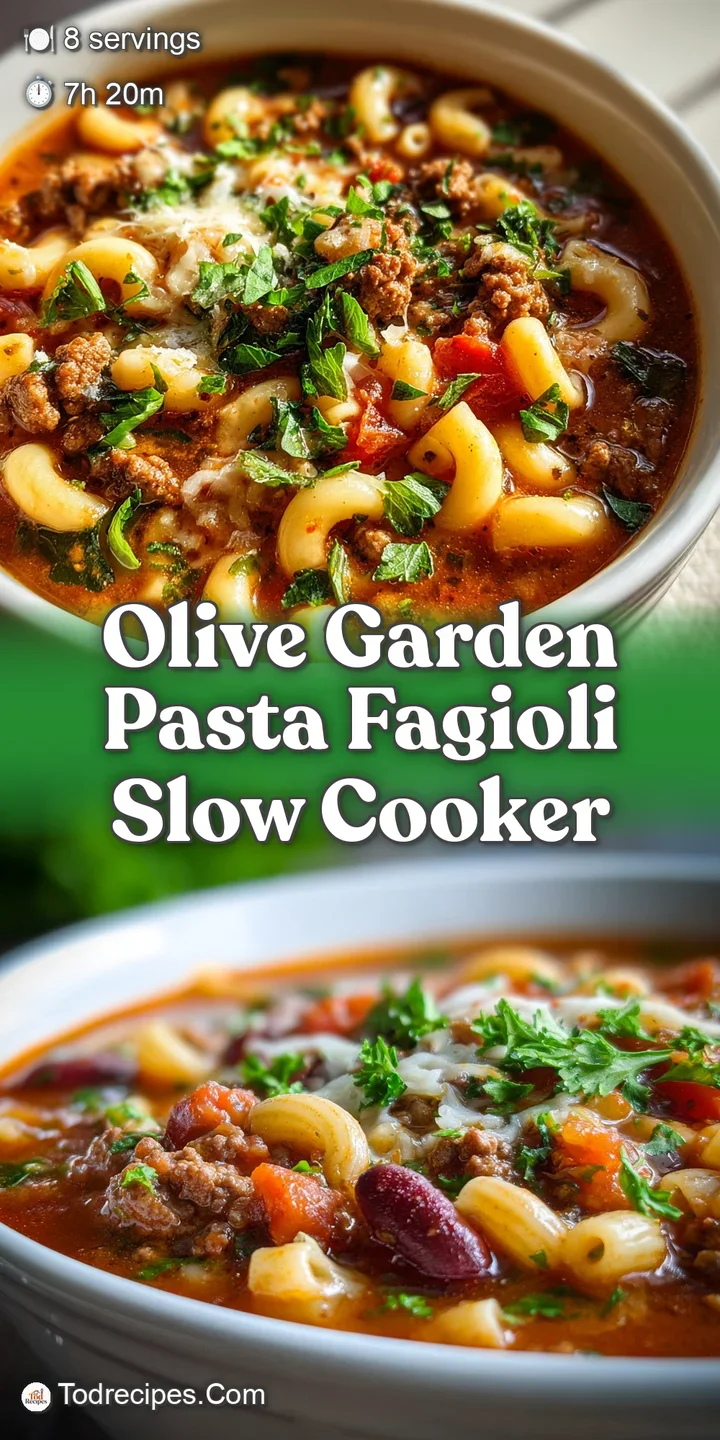
Critical in Sodium
1180 mg mg of sodium per serving (51% % of daily value)
The American Heart Association recommends limiting sodium intake to no more than 2,300mg per day for most adults.
Sodium Reduction Tips for Your Soup:
-
Broth Swap-30%
Use unsalted or homemade beef broth instead of low-sodium broth. This simple change can significantly decrease the sodium content.
-
Tomato Tweak-20%
Opt for no-salt added diced tomatoes. Since tomatoes are a major flavor base, this will help reduce sodium without impacting the overall taste.
-
Bean Balancing-20%
Consider using freshly cooked kidney and cannellini beans, or soak canned beans in water for at least 2 hours (draining and rinsing multiple times) to reduce sodium content.
-
Salt Savvy-25%
Reduce the added salt by half, or eliminate it entirely. Taste the soup after cooking and add a pinch if needed, as the other ingredients contain sodium.
-
Sauce Selection-20%
Choose a marinara sauce labeled as low-sodium or no salt added. Alternatively, make your own marinara sauce to control the sodium levels.
-
Herb Power
Experiment with fresh herbs like parsley, thyme, and bay leaf to enhance flavor naturally. Fresh herbs add depth without increasing sodium.
Recipe FAQs
Can I skip browning the ground beef and add it raw to the slow cooker?
No, you must brown the beef first. Adding raw ground beef results in a greasy texture and lacks the necessary Maillard reaction for deep flavor complexity.
When should I add the ditalini pasta to the slow cooker?
Add the ditalini only during the final 20-30 minutes of cooking. Cooking it for the full 7 hours will cause it to over hydrate and turn into a mushy starch mass.
How long should the slow cooker run on the Low setting for this recipe?
Cook on Low for 7 hours for optimal tenderness. The low, slow heat allows connective tissues in the beef to break down without drying out the beans or broth.
Why must I rinse the canned beans before adding them to the soup?
Rinse the beans thoroughly to remove excess starch and metallic flavor. This prevents the broth from becoming cloudy and keeps the final taste clean rather than "canned."
How can I enhance the savory depth of flavor in the broth?
Toss a frozen Parmesan rind into the broth at the start of the cooking time. This infuses the soup with a deep, salty umami flavor as it slowly melts.
Is it true that I can freeze leftovers safely with the pasta already in them?
False, freezing with the pasta is not recommended for best results. Cook the pasta separately or omit it before freezing; add fresh cooked pasta when reheating to prevent the noodles from bloating.
What is the best substitute if I do not have beef broth available?
Substitute with chicken broth or vegetable stock. While this alters the traditional depth slightly, it maintains the necessary liquid ratio and still creates a delicious soup base.
Slow Cooker Pasta Fagioli With Beef
Ingredients:
Instructions:
Nutrition Facts:
| Calories | 382 kcal |
|---|---|
| Protein | 23.6 g |
| Fat | 9.8 g |
| Carbs | 51.4 g |
| Fiber | 9.2 g |
| Sugar | 8.5 g |
| Sodium | 1180 mg |
