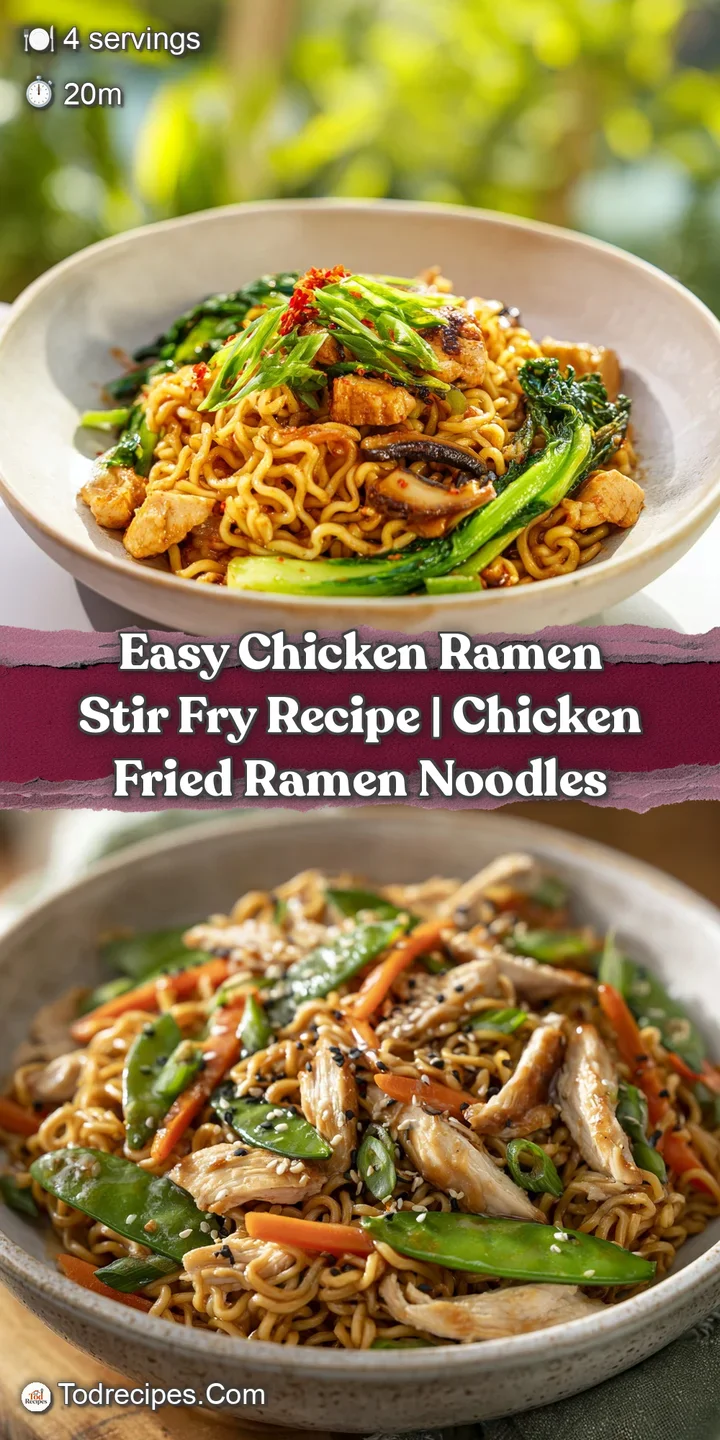
Chicken Ramen Stir Fry: Savory Glaze
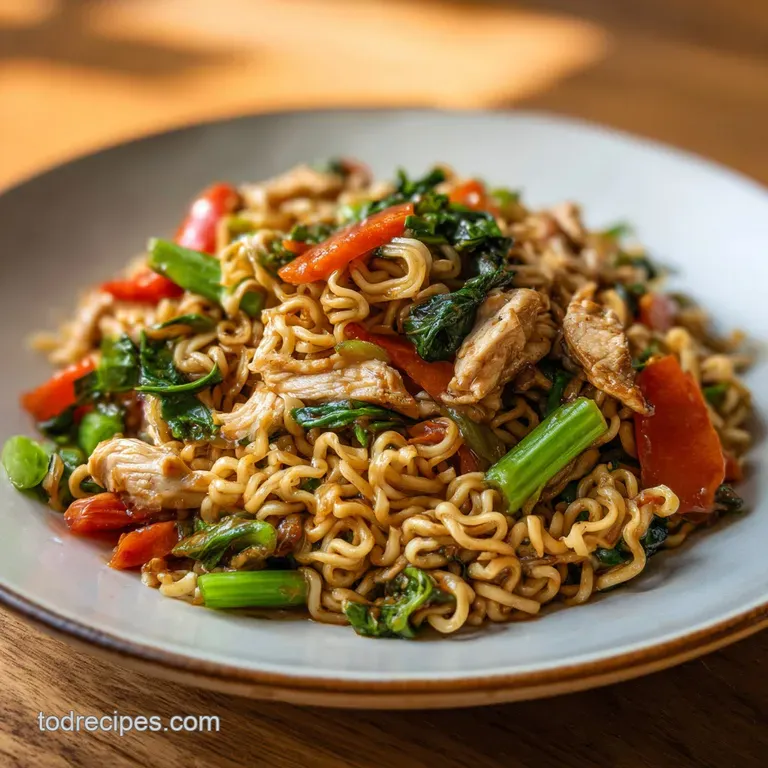
- Time: Active 10 minutes, Passive 10 minutes, Total 20 minutes
- Flavor/Texture Hook: Savory ginger soy glaze with velvety, chewy noodles and charred, snappy vegetables.
- Perfect for: Busy weeknights, budget conscious meal prepping, and cleaning out the crisper drawer.
- Quick Chicken Ramen Stir Fry Recipe
- The Science of Velvety Sauce
- Performance Decision and Timing Table
- Component Analysis of Every Ingredient
- Selecting Quality Budget Friendly Ingredients
- Best Tools for Home Searing
- Step By Step Cooking Guide
- Solving Common Cooking Problems
- Troubleshooting Common Issues
- Flavor Variations and Smart Substitutions
- Storage and Zero Waste Strategies
- Perfect Sides and Serving Ideas
- Scaling for Different Needs
- Debunking Common Kitchen Myths
- Critical in Sodium
- Recipe FAQs
- 📝 Recipe Card
Quick Chicken Ramen Stir Fry Recipe
The sizzle of thinly sliced chicken hitting a shimmering layer of hot oil is the sound of a good night ahead. I remember the first time I tried making this; I was a broke college student staring at a pile of 25 cent noodle packets and a half empty bottle of soy sauce.
I thought there was no way I could recreate that glossy, savory depth I loved from the local noodle shop, but then the aroma of fresh ginger and toasted sesame oil hit the air. It was a complete shift in how I viewed "cheap" food.
We aren't just making noodles here; we are building a balanced, hearty meal that feels like a steakhouse side dish met a street food classic. You don't need a fancy wok or expensive specialty ingredients to get that signature char on your broccoli or that silky coating on your ramen.
It is all about the timing and how you treat the noodles. Trust me, once you see how those humble noodles soak up the brown sugar and rice vinegar, you'll never look at a flavor packet the same way again.
The promise of this dish is simple: big, bold flavors with a texture that ranges from the snap of a red bell pepper to the tender bite of chicken breast. We've all had those soggy, sad stir fries that turn into a watery mess at the bottom of the bowl.
We are going to avoid that entirely by mastering the over high heat flash fry. It’s brilliant, it’s fast, and it’s going to become your new favorite way to use up whatever veggies are lurking in your fridge.
The Science of Velvety Sauce
Alkaline Noodle Resistance: Instant ramen noodles are treated with alkaline salts (kansui), which prevent them from disintegrating when tossed in hot sauce, maintaining a chewy, "bouncy" mouthfeel.
The Emulsion Effect: Combining toasted sesame oil with the starch heavy noodle water and brown sugar creates a stable emulsion that clings to the ingredients rather than sliding off.
Maillard Reaction Control: Thinly slicing the chicken across the grain increases surface area, allowing for rapid browning and flavor development before the meat can overcook and turn tough.
Performance Decision and Timing Table
| Chicken Thickness | Internal Temp | Rest Time | Visual Cue |
|---|---|---|---|
| 1/4 inch strips | 165°F | 2 minutes | Opaque center with golden brown edges |
| 1/2 inch cubes | 165°F | 3 minutes | Firm to the touch and juices run clear |
| Thin medallions | 165°F | 1 minute | Edges begin to curl and turn slightly charred |
Since we are working with high heat, the timing is everything to ensure the chicken doesn't turn into rubber. If you find yourself multitasking, similar to how I do when I'm prepping my Chicken Avocado Wrap recipe, just remember that the chicken will continue to cook slightly once you pull it off the heat. That carryover cooking is your best friend for keeping things juicy.
Component Analysis of Every Ingredient
| Ingredient | Science Role | Pro Secret |
|---|---|---|
| Low Sodium Soy Sauce | Liquid Umami Base | Use low sodium to control salt levels while maximizing fermented flavor depth. |
| Packed Brown Sugar | Caramelization Agent | The molasses content helps the sauce thicken into a glossy glaze that "sticks." |
| Fresh Ginger | Aromatic Sharpness | Freeze your ginger root; it makes it much easier to grate without the fibrous strings. |
| Toasted Sesame Oil | Finishing Fat | This has a low smoke point; use it for flavor at the end rather than for the primary frying. |
Selecting the right components makes the difference between a bland bowl and a vibrant one. For instance, the acidity in the rice vinegar isn't just for tang; it actually helps break down some of the surface proteins in the chicken, making it feel more tender.
It’s these small interactions that build a professional tasting sauce in your own kitchen.
Selecting Quality Budget Friendly Ingredients
- 2 packs (3 oz each) instant ramen noodles: Discard the flavor packets we are making our own liquid gold. Why this? They provide the perfect "chew" for stir frying at an unbeatable price point.
- 1 lb chicken breast: Sliced thinly across the grain. Why this? It's a lean, high protein canvas that absorbs the sauce beautifully.
- 1/4 cup low sodium soy sauce: The backbone of our savory profile. Why this? Gives you full control over the saltiness of the final dish.
- 2 cups broccoli florets: Cut into bite sized pieces for quick cooking. Why this? The "trees" act like sponges for the sauce.
- 1 large carrot: Julienne these for even cooking. Why this? Adds a natural sweetness and a bright color contrast.
- 1 red bell pepper: Thinly sliced. Why this? Provides a crisp texture that doesn't go mushy under high heat.
- 1 tbsp packed brown sugar: For that hit of sweetness. Why this? Helps create a sticky, restaurant style glaze.
- 1 tbsp rice vinegar: For essential balance. Why this? Cuts through the salt and sugar to brighten the whole meal.
- Aromatics (Garlic, Ginger, Green Onion): The flavor foundation. Why this? Fresh aromatics offer a punch that powdered versions just can't match.
| Original Ingredient | Substitute | Why It Works |
|---|---|---|
| Chicken Breast (1 lb) | Firm Tofu (14 oz) | Similar protein structure. Note: Press tofu well to ensure it sears instead of steams. |
| Rice Vinegar (1 tbsp) | Apple Cider Vinegar | Similar acidity levels. Note: Adds a slightly fruitier note to the sauce. |
| Brown Sugar (1 tbsp) | Honey or Maple Syrup | Provides sweetness and viscosity. Note: Honey will brown faster; watch your heat. |
If you are looking to stretch your grocery budget even further, you can easily swap the fresh veggies for a frozen stir fry mix. Just make sure to thaw and pat them dry first. Water is the enemy of a good sear, much like the technique used in our Sheet Pan Chicken recipe, where dry ingredients lead to better caramelization.
Best Tools for Home Searing
For this dish, heat retention is your primary goal. A large cast iron skillet (like a Lodge) or a heavy bottomed stainless steel pan is much better than a thin non stick pan. Non stick often can't handle the high temperatures required to get a proper sear on the chicken and broccoli without damaging the coating.
You want a pan that can get screaming hot and stay that way when you drop the cold ingredients in.
You'll also need a solid pair of tongs and a microplane. Tongs give you the control to flip individual pieces of chicken, ensuring every side gets that golden brown crust. A microplane is the best way to turn that fresh ginger and garlic into a paste that melts into the sauce.
If you don't have one, just mince them as finely as possible with your sharpest knife.
step-by-step Cooking Guide
- Prep the noodles. Boil the ramen noodles in unsalted water for 2 minutes until just softened but still firm (al dente). Note: They will finish cooking in the pan later.
- Whisk the sauce. Combine the soy sauce, rice vinegar, brown sugar, toasted sesame oil, ginger, and garlic in a small bowl.
- Sear the chicken. Heat 1 tbsp of neutral oil in your skillet over high heat until it shimmers.
- Brown the meat. Add the chicken in a single layer and cook for 3 minutes until the edges are golden and the meat is opaque. Note: Avoid crowding the pan to prevent steaming.
- Remove and rest. Transfer the chicken to a plate, leaving the flavorful drippings in the pan.
- Flash fry the veggies. Add the remaining 1 tbsp of oil, then toss in the broccoli, carrots, and bell peppers.
- Sizzle the greens. Stir fry the vegetables for 4 minutes until the broccoli is vibrant green and slightly charred.
- Combine ingredients. Add the whites of the green onions, the cooked noodles, and the seared chicken back into the skillet.
- Glaze the stir fry. Pour the sauce over everything and toss constantly for 2 minutes until the sauce thickens and coats every strand of noodle.
- Final garnish. Remove from heat and top with the green onion tops. Serve immediately while the noodles are at their peak chewiness.
Solving Common Cooking Problems
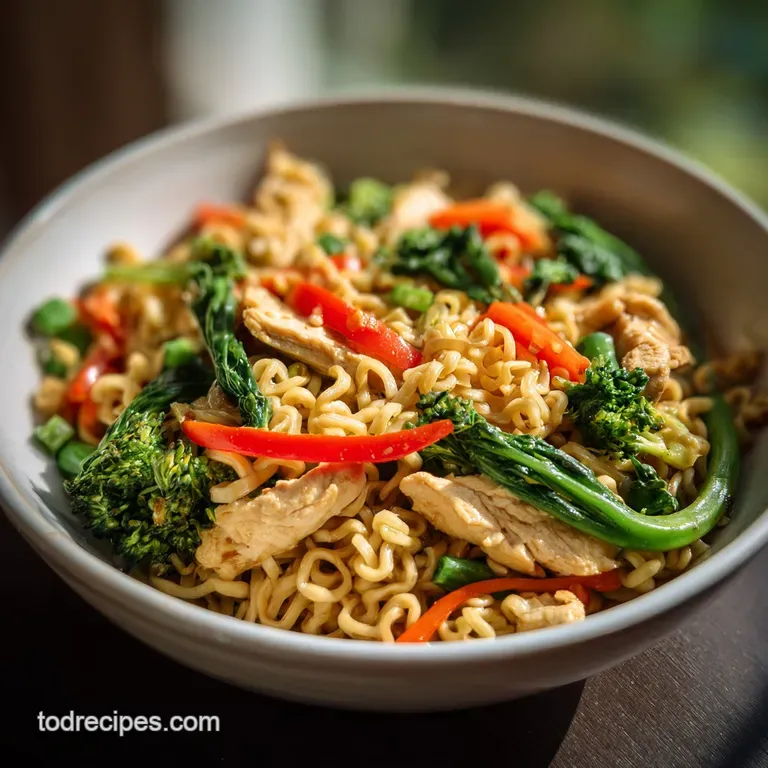
Troubleshooting Common Issues
| Issue | Solution |
|---|---|
| Why Noodles Turn Into Mush | If your noodles feel like a soggy mess, you likely overboiled them in the first step. Remember, the ramen continues to cook when it hits the hot skillet with the sauce. Another culprit is adding too m |
| Why Chicken Becomes Tough | Tough chicken is usually the result of overcooking or slicing the meat too thick. When you slice with the grain, the muscle fibers stay long and stringy. Slicing against the grain cuts those fibers sh |
| Why The Sauce Is Bland | A bland sauce usually needs more acidity or salt. If it tastes "flat," add an extra teaspoon of rice vinegar. If the flavors aren't popping, a tiny pinch of salt or an extra splash of soy sauce can wa |
Common Mistakes Checklist
- ✓ Pat the chicken strips dry with a paper towel before they hit the pan.
- ✓ Don't use the flavor packets; the salt content is often too high and masks the fresh aromatics.
- ✓ Ensure the skillet is hot enough that the oil "shimmers" before adding ingredients.
- ✓ Drain the noodles thoroughly; excess water will steam the dish instead of frying it.
- ✓ Keep all your ingredients prepped and within reach the cooking happens very fast.
Flavor Variations and Smart Substitutions
If you're looking for a different vibe, try making a Szechuan chicken ramen stir fry by adding a tablespoon of chili crisp or Szechuan peppercorns to the sauce. It adds a numbing, spicy heat that is incredibly addictive.
For those who want something sweeter, a teriyaki chicken stir fry with ramen noodles can be achieved by doubling the brown sugar and adding a splash of pineapple juice to the mix.
Chef's Tip: If you're out of fresh ginger, don't just skip it. Use a teaspoon of ginger paste from a tube. It's a budget friendly way to keep that fresh flavor on hand without worrying about a root going moldy in the fridge.
For a gluten-free version, swap the ramen noodles for rice noodles and use tamari instead of soy sauce. The texture will be slightly softer, but the flavor profile remains just as bold. You can also bulk this out with more vegetables like bok choy or snap peas if you're trying to hit those nutritional goals. It's a great way to use up the leftover broccoli you might have if you recently made a Broccoli Casserole recipe.
Storage and Zero Waste Strategies
Storage: Store any leftovers in an airtight container in the fridge for up to 3 days. The noodles will continue to soak up the sauce as they sit, so they might be a bit softer the next day, but the flavor will actually deepen.
Freezing: I don't recommend freezing the fully assembled dish as the noodles can become quite mushy upon thawing. However, you can freeze the sliced raw chicken and the julienned carrots together in a freezer bag for up to 3 months for a "dump and go" meal kit.
Reheating: The best way to reheat is in a skillet over medium heat with a tiny splash of water or chicken broth. This helps loosen the sauce and prevents the noodles from sticking together. Avoid the microwave if possible, as it tends to make the chicken rubbery.
Zero Waste: Don't throw away those broccoli stems! Peel the woody outer layer and julienne the tender center just like the carrots. They have a wonderful crunch and a mild, sweet flavor that fits right into this stir fry.
Also, the whites of the green onions are packed with flavor always saute them with your garlic and ginger rather than tossing them.
Perfect Sides and Serving Ideas
While this is a complete one pan meal, you can easily turn it into a feast. I love serving this alongside some quick smashed cucumber salad or some frozen potstickers that I've crisped up in a separate pan. If you want to lean into the steakhouse feel, a side of charred shishito peppers is a fantastic addition.
- For a crunchy topping: Add toasted sesame seeds or crushed peanuts just before serving.
- For a spice kick: Drizzle with Sriracha or extra chili oil.
- For a fresh finish: Squeeze a lime wedge over the bowl to cut through the richness of the sesame oil.
If you find yourself with extra chicken and noodles, this recipe scales beautifully. Just remember the golden rule: work in batches. If you try to double the recipe in one standard skillet, the temperature will drop, and you'll end up boiling your chicken in its own juices instead of getting that beautiful, savory sear.
Right then, let's crack on and get cooking!
Scaling for Different Needs
- Downsizing (1-2 Servings): Cut the ingredients in half. You can still use a large skillet; the extra space actually helps the moisture evaporate faster, giving you an even better char on the veggies.
- Upsizing (6-8 Servings): Double all ingredients, but increase the salt and spices to only 1.5x at first, then adjust to taste. Reduce the total liquid by 10% to prevent the noodles from getting too heavy.
- Batch Cooking: Sear the chicken and veggies in separate batches, then combine them all with the noodles and sauce in a large pot or wok at the very end.
Debunking Common Kitchen Myths
"You must rinse your noodles to remove starch." Actually, for a stir fry, that residual starch on the ramen helps the sauce emulsify and cling to the noodles. Only rinse if you are making a cold noodle salad.
"Searing meat seals in the juices." This is a classic misconception. Searing is strictly for the Maillard reaction the chemical reaction between amino acids and reducing sugars that creates that deep, savory "browned" flavor.
Moisture loss happens regardless, but the crust makes the meat taste significantly better.
"Frozen vegetables are less nutritious than fresh." Most frozen veggies are blanched and flash frozen at their peak ripeness, often retaining more vitamins than "fresh" produce that has spent days in transit and on grocery store shelves. Don't feel guilty about using frozen broccoli in a pinch!
Critical in Sodium
1145 mg mg of sodium per serving (50% of daily value)
The American Heart Association recommends limiting sodium intake to about 2,300mg per day for optimal health.
Sodium Reduction Tips
-
Dilute Soy Sauce-20%
Even low-sodium soy sauce contributes significantly to the sodium content. Try using 2 tablespoons of low-sodium soy sauce and adding 2 tablespoons of water or unsalted chicken broth to dilute it, which will reduce the overall sodium without sacrificing flavor.
This should be the first strategy to implement, as it has a high impact.
-
Skip the Ramen, Fresh Noodles Instead-15%
Instant ramen noodles, even without the flavor packet, often contain a considerable amount of sodium. Substitute with fresh or dried egg noodles or soba noodles which contain less sodium, and are more nutritious. Consider exploring alternatives such as rice noodles or zucchini noodles.
-
Go Heavy on Aromatics-10%
Enhance the flavor with more garlic, ginger, and green onions. Increasing these aromatics will help compensate for the reduction in sodium and create a more vibrant dish. Consider doubling the amount of ginger and garlic. You can also add some additional, freshly ground pepper to boost the flavor profile.
-
Acidic Boost-5%
Enhance the flavor with more rice vinegar or a squeeze of fresh lemon or lime juice after cooking. The added acidity will brighten the dish and help balance the flavors without relying on salt.
-
Herbs & Spices
Experiment with sodium free herbs and spices like black pepper, red pepper flakes, garlic powder (ensure it's sodium free), or onion powder to enhance the flavor profile without adding sodium.
Recipe FAQs
Can I use fresh chicken thigh instead of breast?
Yes, you absolutely can. Thigh meat has more fat, which keeps it moister during the high heat sear, though you may need to add an extra half teaspoon of oil to the pan.
How do I prevent the sauce from becoming watery at the bottom of the pan?
Ensure your skillet is screaming hot before adding the sauce. The high heat rapidly cooks off the excess liquid from the vinegar and soy sauce, allowing the brown sugar to thicken into a glaze.
Is it true that I must use authentic ramen noodles for this stir fry?
No, instant ramen noodles work best due to their texture. Their alkaline treatment prevents them from breaking down completely in the high heat, giving you that desired chewy bite.
How to adjust the sauce if I prefer a spicier flavor profile?
Whisk in a tablespoon of chili garlic sauce or chili crisp with the main sauce ingredients. If you enjoyed controlling the flavor balance here, the same principle of adding bold aromatics applies when we make the [Mardi Gras Pasta recipe].
Can I use pre-cooked rotisserie chicken instead of raw chicken?
Yes, but adjust the cooking time significantly. Shred or dice the rotisserie chicken and add it back to the pan only during the last minute of cooking just to heat through and coat in the sauce.
Why are my vegetables steaming instead of searing and charring?
You added too many vegetables or the pan was not hot enough. Overcrowding the pan drops the temperature too quickly, forcing the vegetables to release moisture and steam rather than caramelize.
What is the best way to substitute the brown sugar for a liquid sweetener?
Substitute with an equal amount of honey or maple syrup, but reduce the heat slightly. Liquid sweeteners caramelize faster than granular sugar, so watch closely to prevent burning when you master this quick sear technique.
Chicken Ramen Stir Fry Fast
Ingredients:
Instructions:
Nutrition Facts:
| Calories | 508 kcal |
|---|---|
| Protein | 42.4 g |
| Fat | 19.8 g |
| Carbs | 39.5 g |
| Fiber | 3.2 g |
| Sugar | 6.8 g |
| Sodium | 1145 mg |
